
3D embroidery stabilizer plays a crucial role in delivering professional, durable, and visually striking designs. Choosing the right option helps support the fabric, protect stitch depth, and preserve the lifted dimensional look that makes 3D embroidery stand out. This guide compares stabilizer types for 3D embroidery and explains how each option affects texture and lift, including the performance of the 3D embroidery stabilizer. Tear-away, cut-away, and wash-away stabilizers each offer different balances of support and post-stitch removal. By testing options on swatches, you’ll learn which stabilizer works best for your project, fabric, and design complexity.
In other words, the backing material that supports stitches for dimensional embroidery acts as a stability layer rather than a mere fabric layer. Common alternatives to ‘stabilizer’ include embroidery backing, reinforcement sheets, and temporary versus permanent backings, each affecting how the stitched elements hold their shape. When planning 3D effects, practitioners think in terms of support layers, stabilization films, and post-stitch removal strategies to maintain texture. Understanding these related concepts helps you select the right combination for delicate fabrics, dense fills, or layered textures.
The Role of a 3D embroidery stabilizer in Achieving Lift and Dimensional Depth
3D embroidery stabilizer acts as the hidden backbone of your design, supporting stitches and fabric to create pronounced lift and a true sense of depth. By choosing the right stabilizer, you protect stitch depth, reduce puckering, and help the raised elements maintain their form during and after stitching. Within this role, the stabilizer sets the stage for a crisp edge, defined texture, and durable finished work, whether you are working with lightweight fabrics or heavier materials.
Think of stabilization as a balance between support and post-stitch removal. A well-chosen stabilizer allows the 3D effect to pop without leaving visible residues or stiff layers. In practice, testing with swatches, adjusting density, and considering removal methods (tear-away, cut-away, wash-away) helps you tune the dimensional outcome for your specific fabric and design.
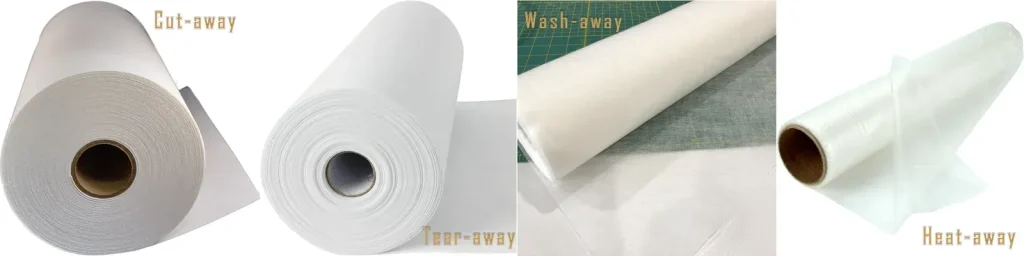
Stabilizer Types for 3D Embroidery: Tear-away, Cut-away, and Wash-away Compared
Tear-away stabilizers are a staple for many 3D embroidery projects because they provide sturdy backing during stitching and are designed to tear away cleanly once the design is finished. They work well on medium to lightweight fabrics or designs with dense stitch coverage, helping to prevent fabric distortion and allowing the filled or raised areas to retain their height.
In contrast, cut-away stabilizers remain in the fabric permanently, offering robust support for knits, heavy stitches, and high-density 3D elements. When you need long-lasting stability, you might pair a cut-away with a light tear-away on top to reduce bulk and preserve pliability behind the lift.
Choosing Stabilizer by Fabric Weight and Stitch Density
Fabric weight and fiber content dictate how much backing your design requires. Lightweight fabrics benefit from lighter stabilization, while heavier materials often demand stronger backing to prevent sinking or distortion in the raised features. For 3D embroidery, aim for a balance that supports lift without crushing texture.
Stitch density and design complexity further steer stabilizer choice. Dense fills, satin columns, or multi-layered 3D elements may require more rigid support, and sometimes a layered approach—such as a cut-away foundation with a tear-away top—can deliver depth with controlled finished texture and minimal edge puckering.
Using Tear-away Stabilizer Effectively for 3D Embroidery
To maximize lift with tear-away, hoop the fabric securely, place the stabilizer on the bottom side, and stitch with consistent fabric tension. Tear-away should tear along stitch lines with minimal residue, preserving the raised areas and edge definition that define 3D embroidery.
After stitching, carefully remove excess stabilizer while watching for loose threads at the base of raised elements. If the design sits prominently on the surface, you may prefer a light tear-away layer underneath a top layer of stabilizer to maintain a clean finish and easy removal.
When to Use Cut-away Stabilizer for Robust 3D Embroidery on Knits
For knits and unstable fabrics, cut-away stabilizers offer durable support that stays in the final piece. They help keep high stitch density and depth from distortion, preserving volume in raised motifs even after laundering or handling. A combination approach—cut-away underneath with a small tear-away on top—can reduce bulk while maintaining stability.
Consider trim and finishing: cut-away backing should be cleanly trimmed around edges and shapes, and you may need to adjust density and stitch paths to prevent stiff interfaces that dull the 3D look. Testing on representative swatches helps you calibrate how much backing to leave in place.
Achieving a Clean Finish with Wash-away Stabilizers on Delicate Fabrics and Layered 3D Effects
Wash-away stabilizers dissolve with water, leaving only the embroidery stitches behind. This makes them ideal for delicate fabrics, layered 3D designs, or projects where you want minimal post-stitch residue and a crisp finish around lifted elements. They also enable cleaner back surfaces for designs with complex layering.
Because wash-away stabilizers disappear, you may pair them with a light tear-away or cut-away during stitching to provide initial support. Plan for the final rinse or wash, ensure compatibility with your thread and fabric care, and test to confirm that the final texture maintains the intended lift and texture without soggy edges or fraying.
Frequently Asked Questions
What is a 3D embroidery stabilizer and why is it essential for 3D embroidery projects?
A 3D embroidery stabilizer is a secondary layer placed under (and sometimes over) the fabric to support stitches and preserve volume. It prevents puckering and helps achieve the lift, depth, and dimensional effects that define 3D embroidery. Common options include tear-away stabilizer, cut-away stabilizer, and wash-away stabilizer, and choosing the right stabilizer types for 3D embroidery is key for durability and finish.
How do tear-away stabilizers function in 3D embroidery stabilizer setups, and when should you use them?
Tear-away stabilizers provide sturdy support during stitching and can be removed after the design is complete. They work well for dense stitch coverage on lighter fabrics, with the stabilizer on the bottom of the hoop, and tear away cleanly along stitch lines to avoid impacting the raised areas.
When should you choose cut-away stabilizer for 3D embroidery stabilizer projects?
Cut-away stabilizers stay in the fabric and offer durable support for knits, unstable fabrics, or designs with high stitch density and depth. They help maintain the raised 3D elements and are often paired with a light tear-away on top to reduce bulk.
What are wash-away stabilizers and in which scenarios are they best for 3D embroidery stabilizer work?
Wash-away stabilizers dissolve in water, leaving only stitches behind. They are ideal for delicate fabrics, layered designs, or projects where the stabilizer would be visible after finishing; they are often used under a light tear-away or cut-away to provide initial support during stitching.
What factors should guide my choice among stabilizer types for 3D embroidery?
Consider fabric type and weight, stitch density and design complexity, fabric stretch, the desired finish, and care requirements. For example, lighter fabrics may use tear-away, knits may need cut-away, and delicate pieces may benefit from wash-away; testing combinations under stabilizer types for 3D embroidery can help guide your decision.
How can I test stabilizers for 3D embroidery stabilizer to optimize lift and texture?
Start with small swatches hooped with the intended stabilizer and run a representative portion of your design. Compare depth and lift after stitching, check how cleanly tear-away removes, and inspect the back for neatness. Document results to guide future choices.
| Aspect | Key Points |
|---|---|
| What is a stabilizer? | A stabilizer is a secondary layer added to fabric to prevent stitches from puckering, stretching, or shifting. For 3D embroidery, it should support stitches while preserving lift and depth. |
| Main stabilizer types | Tear-away, Cut-away, Wash-away, and Specialty combinations. Each type supports different fabrics, stitch densities, and final texture. |
| Tear-away stabilizer | Provides solid support during stitching and can be removed after finishing. Best for dense stitches on light-to-medium fabrics; tear along stitch lines with minimal residue to preserve 3D lift. |
| Cut-away stabilizer | Remains in fabric; ideal for knits and high-density designs. Offers robust support to maintain stability and depth; often paired with a light tear-away on top to reduce bulk. |
| Wash-away stabilizer | Dissolves in water, leaving only stitches. Useful for delicate fabrics or clean backs; may be combined with light tear-away or cut-away for initial support. |
| Specialty and combination stabilizers | Fusible stabilizers, water-soluble films, or tension-adjusting stabilizers. Layering (e.g., tear-away under wash-away) can deliver both robust stitching and a clean finish. Test combinations. |
| Choosing the Right Stabilizer: Factors to Consider |
|
| Practical Testing Guide |
|
| Tips Across Fabrics and Projects |
|
| Case Study: 3D Floral Outline | Use tear-away underneath for anchoring; add wash-away on top for delicate fabrics or crisp petal edges; cut-away may be preferred for large satin fills to maintain shape. |
Summary
3D embroidery stabilizer is the backbone of dimensional embroidery, providing lift, depth, and lasting texture that makes designs stand out. By balancing support with removability and considering fabric type, stitch density, and design complexity, you can select the stabilizer that preserves the exact look of your 3D pieces. Test different combinations, document results, and adapt per project to keep the raised elements crisp and durable across fabrics and uses. The right 3D embroidery stabilizer empowers your designs to pop with professional quality.