
Screen printing techniques form the backbone of apparel, poster, and signage production. From selecting screen printing ink types to matching substrates, the right choices set the foundation for consistent results. This guide covers silk screen printing methods, ink handling, and troubleshooting screen printing to help you navigate common challenges. By adopting screen printing tips and best practices, you can reduce waste, improve color accuracy, and streamline your workflow. A well-structured industrial screen printing workflow, coupled with disciplined setup and curing, helps you scale from prototypes to larger runs with confidence.
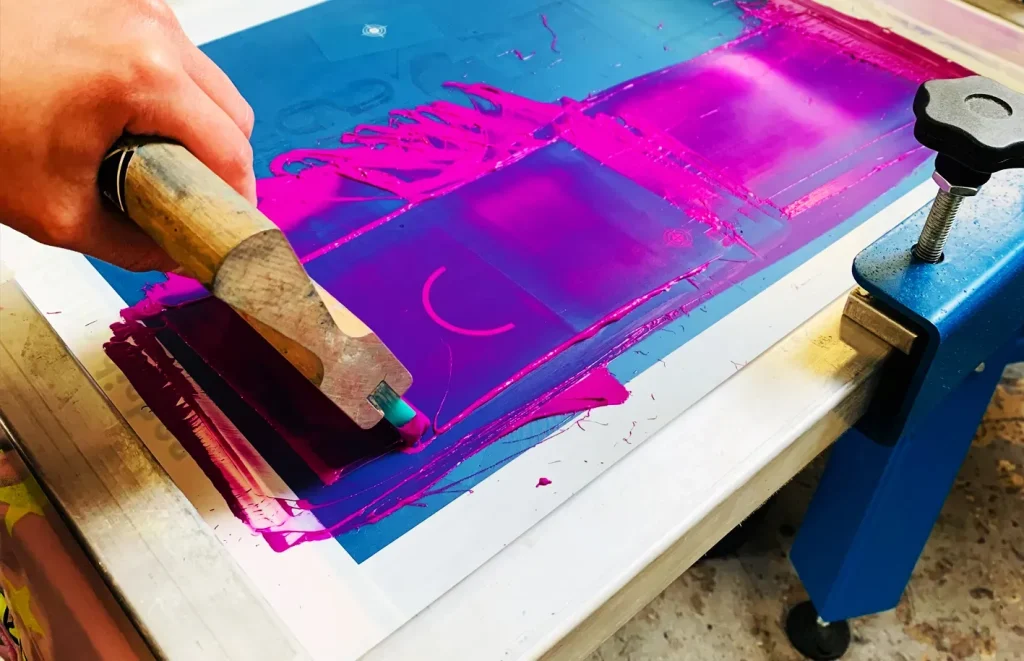
Beyond the standard terminology, the same process is often described as mesh-based printing or silkscreen methods, where a stencil directs ink onto fabric, paper, or plastic. Operators mount a screen, apply emulsion, and employ a squeegee to push ink through the open areas, producing durable imagery across substrates. Effective planning hinges on pre-press checks, color management, and consistent curing, aligning with broader production workflows and quality control goals. In practice, this craft blends artistry with engineering, as substrate behavior and ink compatibility dictate texture, opacity, and washfastness.
Screen Printing Techniques: Core Concepts and Practical Application
Screen printing techniques form the foundation of apparel, poster, and signage production, aligning with a disciplined workflow and repeatable results. In practice, success hinges on controlling variables such as mesh count, stencil type, emulsion, ink viscosity, squeegee hardness, and curing conditions. This descriptive overview emphasizes how a solid grasp of these elements translates into predictable outcomes, whether you’re printing on fabric, paper, or specialty substrates. By understanding the core methods and applying proven screen printing tips and best practices, you can elevate both small runs and larger orders with confidence.
A well-structured approach to screen printing reduces waste and speeds up production. When you document settings for different materials, you build a dependable playbook that guides future work, minimizes surprises, and supports consistent quality across batches. This foundation enables you to move beyond one-off projects into scalable production, where repeatability and attention to detail become your competitive advantage.
Choosing the Right Screen Printing Ink Types for Your Project
Ink selection is a decisive factor in print quality, durability, and the final look of your product. This section highlights the importance of understanding screen printing ink types and how they align with substrates such as cotton, polyester blends, paper, or specialty surfaces. By connecting ink formulations to your end-use goals—opacity, hand feel, and color brightness—you can tailor each job for optimal performance.
Common options include plastisol for bold, opaque graphics with strong color on textiles; water-based inks for a softer hand and matte finish; discharge inks for retro, vintage looks on cotton; and specialty inks like UV-curable or puff for dramatic effects. Selecting the right ink type involves considering curing requirements, substrate compatibility, and long-term durability, ensuring your final print meets both aesthetic and functional expectations.
Silk Screen Printing Methods: Tools, Mesh Counts, and Stencil Techniques
Silk screen printing methods blend traditional craft with modern technology. This subheading explores how frame selection, mesh count, and stencil design influence coverage, detail, and repeatability. Modern workflows rely on synthetic mesh, photo emulsion stencils, and precise tensioning to produce consistent images across widths. Understanding how mesh count affects ink flow and definition helps you choose the right combination for your design.
Equally important are emulsions, capillary films, and the quality of the stencil. Proper coating on both sides of the screen, along with accurate alignment and precise squeegee technique, unlocks reliable results across fabrics and substrates. When you pair the right mesh with a thoughtful stencil strategy and disciplined squeegee control, you extend your silk screen printing methods into versatile, high-quality production.
Color Management and Print Preparation for Consistent Results
Color management and print preparation are critical to achieving repeatable, accurate results. Start with a calibrated workflow that supports color matching for underbases, consistent base colors on colored substrates, and sound color separation strategies to preserve detail across layers. By planning the color order and choosing between a built-up base or overlay approach, you set the stage for predictable outcomes in multi-color prints.
Beyond ink choice, effective print preparation includes substrate testing, ink viscosity checks, and proper white underbase when required. Standardizing pre-production checks and color verification can prevent costly mistakes in large runs. Adopting screen printing tips and best practices for color management ensures your team delivers consistent, market-ready results from one batch to the next.
Industrial Screen Printing Workflow: Preparing for Large Runs
In industrial screen printing workflow, efficiency and repeatability drive profitability. This section outlines pre-press checks, standardized ink management, automated curing where available, and robust color matching protocols essential for large orders. Establishing standard operating procedures (SOPs) creates a predictable path for new staff and reduces variability across shifts and machines.
Documented processes, continuous improvement, and scalable tooling are the backbone of production at scale. By aligning equipment setup, material handling, and quality control with an optimized workflow, you can maintain high quality while increasing throughput. This integration of planning and execution exemplifies how disciplined screen printing techniques translate into reliable, repeatable performance on large runs.
Troubleshooting Screen Printing: Common Issues and Practical Fixes
Even experienced printers encounter issues that can derail a run. Troubleshooting screen printing starts with quick diagnosis of misregistration, ink bleeding, and faint prints. Misregistration often points to registration marks, frame tension, or substrate placement; adjust these elements, and test again to verify alignment. Ink bleeding may indicate too high viscosity or excessive ink on the screen; reduce volume or revise the stencil design to improve edge sharpness.
Another frequent challenge is achieving consistent color on dark substrates or with color blends. Tuning squeegee pressure, optimizing ink selection for opacity, and employing a white underbase can restore vibrancy and readability. By applying a structured troubleshooting approach—documenting symptoms, testing adjustments, and validating results—you build resilience into your process and minimize downtime on future projects.
Frequently Asked Questions
What are the core screen printing techniques and how do you select the right screen printing ink types for a given substrate?
Core screen printing techniques include selecting the right mesh, applying a durable emulsion stencil, controlling squeegee pressure, and achieving proper curing. When choosing screen printing ink types, factor substrate porosity, opacity needs, and hand feel: plastisol inks for bold, opaque prints on cotton; water-based inks for a softer hand on textiles; discharge inks for dyed fabrics; and specialty inks for effects. Match curing conditions to the ink type and keep viscosity consistent to ensure reliable results.
How do silk screen printing methods differ when printing on fabric versus paper, and what factors affect print detail?
Silk screen printing methods rely on mesh count, emulsion durability, and stencil design, with adjustments for substrate porosity and texture. On fabric, choose inks and curing profiles that accommodate stretch and weave; on paper, use finer mesh and precise emulsions for sharp details. Key factors include mesh count, emulsion chemistry, stencil design, ink viscosity, color layers, and accurate curing.
What are essential screen printing tips and best practices to ensure color accuracy, consistency, and durable results?
Follow screen printing tips and best practices by starting with a clean workspace, calibrating color management, and pre-previewing each job. Use built-under bases on dark substrates, plan the print order, and perform test runs before production. Regularly care for screens, monitor ink temperature and viscosity, and strictly follow curing parameters to ensure durability.
What does an industrial screen printing workflow look like for large runs, and how can you maintain quality across shifts?
An industrial screen printing workflow emphasizes repeatability: pre-press artwork setup with careful color separation, standardized ink management, and documented standard operating procedures. In production, use automated or semi-automated presses and consistent curing, followed by a rigorous quality check at each stage. Document results and train staff to minimize variability across shifts.
What troubleshooting screen printing issues are most common, and how do you diagnose misregistration, ink bleed, or incomplete prints?
Common troubleshooting screen printing issues include misregistration, ink bleed, and faint prints. Diagnose by inspecting registration marks, testing frame tension, and confirming substrate placement. Reduce ink volume or adjust squeegee pressure to fix ink bleed; increase opacity or apply a white underbase for light-dark contrast; verify stencil integrity and curing to resolve faint prints.
How can you optimize screen printing techniques for multi-color designs, including color management and substrate considerations?
To optimize multi-color designs, develop a robust color management approach: create a color library, plan color separations (CMYK or spot colors), and choose the right order of color application. Use underbases for opacity on dark substrates and test color fastness on each substrate. Maintain registration accuracy across runs and adjust for substrate differences to ensure consistent results.
| Topic | Core Idea | Representative Points |
|---|---|---|
| Foundation of Screen Printing Techniques | The basic concept of transferring ink through a mesh and the many variables that influence print quality. | Ink passes through open screen areas created by a stencil; key variables include mesh count, stencil type, emulsion, ink viscosity, squeegee hardness, and curing conditions. |
| Ink Types & Applications | Different ink families and their best-use scenarios. | Plastisol for bold, opaque textiles; water-based for softer hand on fabrics; discharge for vintage looks; specialty inks (UV, glow, puff) for effects. |
| Color Management & Preparation | Color planning and substrate prep to ensure consistent results. | Calibrated workflows, white underbases on colored substrates, and careful color separation and order planning for multi-color prints. |
| Silk Screen Methods & Tooling | From traditional techniques to modern equipment and stencils. | Mesh count and tension, emulsion chemistry, stencil design, and how these affect ink flow and detail. |
| Equipment & Workspace Setup | A productive setup balances quality and efficiency. | Stable workbench, good lighting, curing heat source, controlled environment; routine screen maintenance and cleanliness. |
| Best Practices for Consistency | Disciplined processes that reproduce reliable results. | Pre-production checks, standardized curing, sample runs when introducing new inks/substrates, documentation. |
| Troubleshooting & Problem Solving | Common issues and how to diagnose and fix them quickly. | Misregistration, ink bleeding, faint prints; adjust registration, ink viscosity, stencil design, and squeegee pressure. |
| Color Management for Multi-Color Workflows | Strategies for separating colors and preserving detail across layers. | Plan separations (CMYK or spot colors), halftones for gradients, test colorfastness on fabrics. |
| Substrates & Ink Compatibility | Different substrates require different inks and curing profiles. | Textiles vs paper vs plastics: adjust inks, curing temperatures, and post-treatment accordingly. |
| Advanced Tips for Seasoned Printers | Ways to push efficiency and quality further. | Automated or semi-automated presses, color libraries, ongoing ink management calibration, and exploring special inks. |
| Industry Workflow for Large Runs | Scalable production considerations. | Pre-press checks, automated curing where possible, standardized SOPs, and reproducible results across shifts. |
Summary
Conclusion