
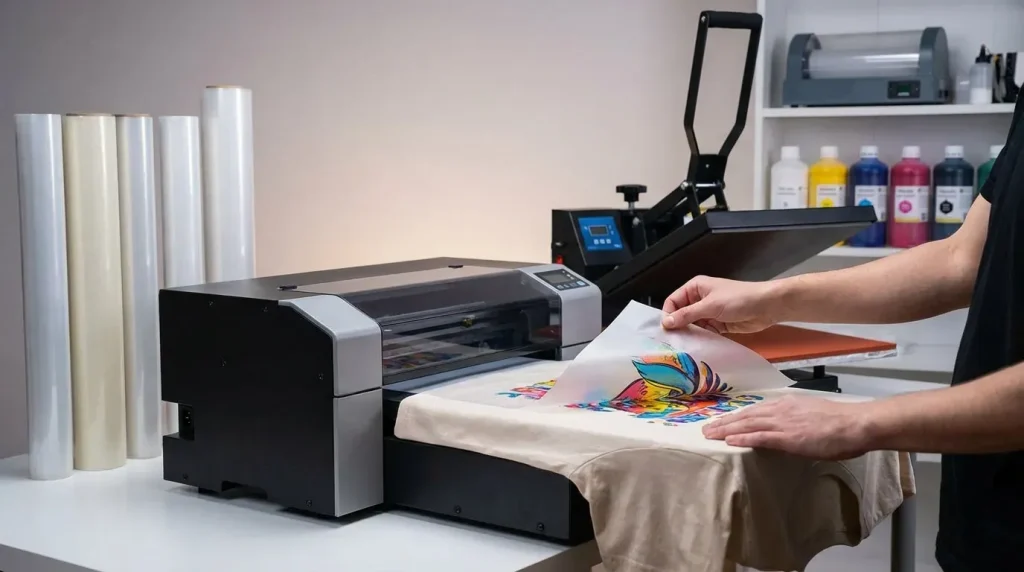
DTF Printing 101 is your practical bridge between digital design and reliable heat-transfer techniques for garments. In this introduction, you’ll learn how DTF printing works, what equipment you need, and how to move from concept to finished, vibrant apparel. If you’re curious about printing on T-shirts, hoodies, and other fabrics, this guide walks you through the direct-to-film workflow with clear, actionable steps. From selecting a DTF printer to understanding color management and choosing the right transfers, the emphasis is on repeatable, scalable results. By the end, you’ll see how this approach can boost creativity and production efficiency for small runs and growing shops.
Think of this technique as a modern film-to-fabric decoration, where a digitally printed PET transfer layer is bonded to fabric with heat. The same concept can also be described as a film-based textile transfer or a dye-on-film process that eliminates some of the pretreatment steps of other methods. It sits alongside and complements methods like DTG and traditional heat transfers, offering a flexible option for small to mid-volume runs across a variety of fabrics. As you compare options, consider the workflow, curing needs, and the balance of costs, durability, and turnaround that this approach provides.
DTF Printing 101: A Practical Guide to Direct-to-Film Garment Decorating
DTF Printing 101 introduces a practical, scalable approach to turning designs into wearable art through direct-to-film technology. By combining the flexibility of digital imaging with proven heat-transfer steps, you can print vibrant images on T-shirts, hoodies, and a variety of fabrics using the direct-to-film workflow.
This overview clarifies what DTF printing is, how the process flows from artwork to the finished garment, and why it can be a reliable foundation for both hobbyists and growing print shops. When you talk about a DTF printer, DTF transfers, and white underbase strategies, you start to understand planning, color management, and curing as part of a repeatable, ROI-friendly method.
Choosing the Right DTF Printer, Inks, and Films for Consistent Results
Selecting the right DTF printer means evaluating ink systems, white ink capabilities, and maintenance needs. Look for a printer that supports CMYK plus white inks, with reliable ink delivery and easy upkeep to ensure consistent results when producing DTF transfers across a range of fabrics.
Beyond the hardware, choose high-quality PET transfer films and adhesive powders, and invest in color management tools and RIP software to control color fidelity, print density, and repeatability across batches.
Design, Color Management, and File Preparation for Reliable DTF Transfers
DTF starts with design preparation. Aim for 300 DPI at the final print size, plan white underbase for both light and dark fabrics, calibrate your monitor with correct ICC profiles, and account for garment color impact to preserve detail and vibrancy.
Save vector artwork for shapes and text and high-quality raster images for photos, keeping layers organized for potential edits. Run pre-production test prints on target fabrics to verify alignment, color balance, and overall appearance before committing to larger batches.
The Full DTF Workflow: From Printing to Curing and Transfer
Core steps in the DTF workflow include design preparation, printing onto the PET film with a DTF printer (often using white ink where needed), powder application, curing, and then transferring the design with heat and pressure. The result should be a smooth, durable print that adheres to fabric fibers.
Finish with a film peel (hot or cold depending on material), inspect the print, and perform post-transfer finishing steps such as a quick wash test or a light press for texture control, ensuring long-term durability and customer satisfaction.
DTF vs Alternatives: When Direct-To-Film Fits DTG, Heat Transfer, and Screen Printing
DTF printing often offers broader fabric compatibility, stronger white underbase performance, and potentially lower per-unit costs at modest volumes. Compared with DTG, it can deliver vibrant color with simpler maintenance and less pretreatment while remaining efficient for small to medium runs.
Compared with traditional heat transfer and screen printing, DTF reduces setup time for diverse designs and enables rapid iteration. When done with proper curing and finishing, DTF transfers can be just as durable as alternatives, with fewer steps and more workflow flexibility for varying orders.
Costs, ROI, and Scaling a DTF Garment Printing Operation
Launching a DTF garment printing operation requires upfront investment in a DTF printer, inks, films, powders, a heat press, and software. While costs vary, you can optimize per-unit expenses over time by improving ink usage, reducing waste, and increasing batch sizes, which helps improve ROI for customizable apparel work.
As you scale, explore parallel workflows, faster curing options, and expanded fabric options to grow capacity. Implement regular maintenance, robust quality control, and a dedicated production line for high-volume transfers to sustain consistency and meet growing demand.
Frequently Asked Questions
What is DTF Printing 101 and what benefits does it offer for garment decoration?
DTF Printing 101 defines DTF printing as a practical, scalable garment decoration workflow using PET transfer film and heat pressing. It highlights vibrant color, broad fabric compatibility, and reliable results when the workflow is planned and repeated. The guide walks you from concept to finished DTF transfers on tees, hoodies, and other fabrics.
In DTF Printing 101, how does direct-to-film (DTF printing) compare to DTG, heat transfer, and screen printing?
DTF Printing 101 frames direct-to-film as a flexible alternative to DTG, traditional heat transfer, and screen printing. It often delivers brighter whites on dark fabrics, strong color vibrancy, and good durability for small to medium runs. The guide helps you compare methods and choose the right approach for your designs and volumes.
What essential equipment do I need to start DTF printing according to DTF Printing 101?
DTF Printing 101’s starter equipment list centers on a DTF printer capable of white ink, plus PET film, adhesive powder, a curing station, and a reliable heat press. It notes that you can start with midrange gear and upgrade as volumes grow, prioritizing reliability and after-sales support. In time you may add better inks, films, and curing options.
How should I approach design, color management, and file prep in DTF Printing 101 for DTF transfers?
DTF Printing 101 recommends solid design prep and color management for DTF transfers: aim for 300 DPI final resolution, calibrate monitors with ICC profiles, and plan white underbase for light-on-dark designs. It covers file types, organized layers, and the importance of test swatches on target garments to predict color and reduce reprints.
What are the key steps in the DTF workflow described in DTF Printing 101?
According to DTF Printing 101, the core workflow includes design prep, printing on PET film with CMYK plus white, powder application, curing, transferring to the garment, and finishing (peel and post-transfer care). Following a repeatable sequence helps ensure consistent results across different fabrics.
What ROI considerations and scaling tips does DTF Printing 101 provide for starting a DTF garment printing operation?
DTF Printing 101 discusses cost, ROI, and scaling for a DTF garment printing operation: factor upfront investments in a printer, inks, films, powders, heat press, and software; per-unit costs decrease with volume and process optimization. To scale, consider batch printing, faster curing options, and dedicated high-volume lines to improve turnaround and consistency.
| Aspect | Key Points |
|---|---|
| What is DTF Printing? | A digital textile process that prints designs onto a PET transfer film using CMYK inks (often with white ink for light fabrics and color on dark backgrounds). After printing, adhesive powder is applied, cured, and the film is heat-transferred to fabric to create a durable, vibrant design. |
| Why choose DTF? | Offers strong color vibrancy across many fabrics, predictable white underbase, and durable transfers. Generally more versatile and potentially lower per-unit costs for small to medium runs compared with some methods, but trade-offs exist. |
| How Direct-To-Film Printing Works | Design prep → Printing on PET film with inkset (white if needed) → Powder application → Curing → Transfer with heat & pressure → Finishing (peel, post-transfer care) |
| Equipment & Materials You’ll Need | DTF printer with White ink support; CMYK inks; PET transfer film; adhesive powder; curing/heat station; heat press; design/RIP software; cleaning/maintenance supplies. |
| Design, Color Management & File Prep | Aim for 300 DPI final size; calibrate monitors and ICC profiles; plan white underbase; use vector art for shapes/text and high-quality rasters for photos; consider garment color and materials. |
| Workflow & Best Practices | Pre-print checks; clean film handling; even powder spread; proper curing; consistent transfer parameters; post-transfer finishing and care; test prints on target garments to validate results. |
| DTF vs Other Methods | DTF sits between DTG and traditional transfers: broader fabric compatibility and strong white underbase; durable results with fewer steps compared to some methods; consider cost, complexity, and run size. |
| Design & Printing Tips for Consistency | Maintain color references across batches; optimize white underbase; account for garment color impact; build a color library of profiles and tests. |
| Troubleshooting Common Issues | Faded colors, powder adhesion issues, peeling, ghosting; fixes include adjusting white ink, curing, curing consistency, film handling, and transfer parameters. |
| Maintenance, Quality Control & Scaling Up | Regular cleaning, replace worn parts, routine testing with known-good designs, consider batch printing or parallel workflows for higher volume. |
| Costs, ROI & Getting Started | Upfront investment in printer, inks, films, powders, heat press, and software. Per-unit costs drop with optimization and larger batches; ROI depends on volume and efficiency. |
Summary
Conclusion: