
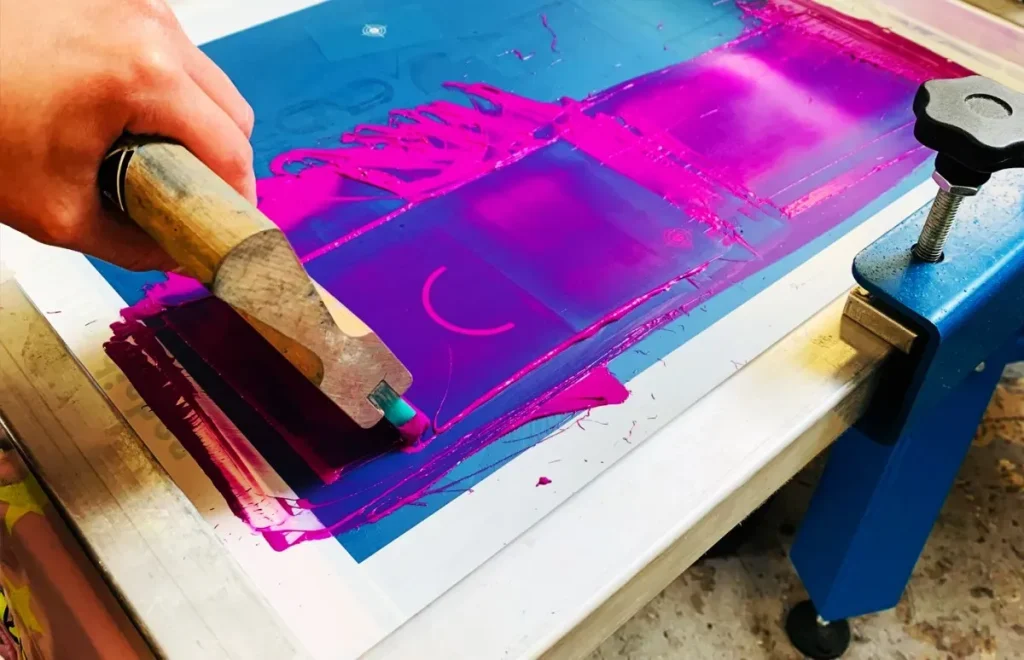
Screen printing techniques blend bold graphics with tactile texture, offering a scalable way to reproduce art across fabrics, posters, and product labeling. Whether you’re working with line art screen printing or more complex color work, the process rewards crisp edges and consistent ink laydown. With the right screen printing inks, you can achieve vivid screen prints that pop with saturation and durable screen prints that endure repeated washes. This balance makes silkscreen printing methods a favorite for apparel, posters, and labeling where color fidelity matters. Exploring the basics of ink choices, mesh counts, and curing will help you craft professional results.
Beyond the explicit terminology, this stencil-based craft scales from small runs to large productions, using a mesh screen, emulsion, and squeegee in a coordinated workflow. Known in many circles as silkscreen printing methods, the technique emphasizes repeatable impressions and edge clarity that hold up under scrutiny. Printers often discuss screen printing inks—plastisol, water-based, and specialty blends—that affect feel, opacity, and durability on different substrates. By focusing on color layering, precise registration, and proper curing, this approachable method delivers professional results for both hobbyists and studios.
1. Screen printing techniques: Core concepts, history, and practical outcomes
Screen printing techniques revolve around a mesh screen, a stencil, and a controlled squeegee stroke that pushes ink onto a substrate. This approach remains versatile enough to print on textiles, paper, plastics, glass, and wood, yielding strong color saturation and solid coverage. When designers discuss line art screen printing, they’re highlighting crisp edges, clean negative space, and scalable effects that stay sharp from close inspection to distant viewing.
By combining simple tools with a well-planned workflow, screen printing techniques bridge creative intent and scalable production. The method supports both bold, flat areas of color and nuanced halftone patterns, making it a dependable option for reproducing vivid screen prints across large runs without sacrificing detail or texture.
2. Artwork preparation for line art screen printing: from sketch to print-ready files
Effective artwork preparation starts with clean, high-contrast line art and efficient color separations. Vector-based artwork preserves crisp edges when scaled, which is essential for line art screen printing. If the original art is raster-based, converting to vector and refining edges helps prevent feathering and ensures sharp outlines across multiple layers.
Halftone patterns can simulate shading in color runs, maintaining punchy, opaque blocks of color. Preparing print-ready files also means planning color order and registration marks so each layer aligns precisely, delivering a professional result for vivid screen prints.
3. Hardware and consumables for silkscreen printing methods: frames, mesh, emulsions, and squeegees
The hardware and consumables define the final appearance of prints. Screens with appropriate mesh counts balance detail and ink deposition, while emulsion thickness and coating affect stencil sharpness and edge definition. The squeegee durometer and stroke influence ink laydown, with precision stillness essential for clean line art.
In silkscreen printing methods, selecting the right frame tension, mesh, and emulsion creates a stable printing platform. A controlled squeegee action prevents ghosting and ensures consistent performance across runs, especially when reproducing crisp edges on dark fabrics or high-contrast line work.
4. Ink systems for durable and vibrant results: screen printing inks, plastisol, water-based, and specialty blends
Ink selection is a cornerstone of achieving durable screen prints and vibrant color. Plastisol inks offer opacity, durability, and strong color saturation that work well on a range of fabrics, delivering vivid screen prints with a glossy finish. Water-based inks, by contrast, yield a softer hand and a breathable finish, which can be ideal for premium apparel with a more vintage look.
Discharge inks and specialty blends enable ultra-soft hand and subtle color on dark fabrics by replacing dye with pigment. Each ink system has its own cure requirements and wash durability, so aligning curing protocols with ink chemistry is critical to maximizing longevity and colorfastness.
5. Layering and color management for line art and vivid prints
Color layering is where the potential of screen printing really shines. Artworks are separated into individual color layers and printed in a precise sequence. For line art screen printing, starting with a neutral edge layer and then adding color fills helps maintain clean boundaries and strong edge definition, while careful registration keeps layers aligned for sharp final results.
Vivid screen prints rely on careful color matching and precise registration. Pantone references or custom color formulas help ensure consistency across runs, while controlling ink flow through proper squeegee pressure and flood strokes prevents bleed and halo effects around line art elements.
6. Substrates, surface prep, and post-processing for lasting results
Textiles, posters, and plastics each require unique surface preparation to optimize ink adhesion and longevity. Fabrics often benefit from pretreatment or pretensioning to minimize ink bleed and improve color fidelity, while non-porous substrates may need surface priming for better ink uptake. Proper substrate preparation helps vivid line art retain crisp edges after washing.
Post-processing steps—such as finishing coatings, heat pressing, or automatic curing—enhance durability and wash resistance. There’s an ongoing emphasis on sustainability in screen printing techniques, with water-based inks, low-VOC formulations, and screen reclamation practices helping reduce environmental impact while preserving color fidelity and texture.
Frequently Asked Questions
What makes line art screen printing a standout in screen printing techniques?
Line art screen printing relies on a tight stencil and accurate registration to produce crisp edges on a range of substrates. In screen printing techniques terms, you get sharp negative space and scalable halftones, making it ideal for logos, typography, and bold line work.
What artwork preparation steps are essential for reliable line art screen printing when layering colors?
Prepare artwork as vector line art to preserve edges when scaled; perform clean color separations and ensure high contrast between elements. If using raster art, convert to vector and refine edges to prevent feathering, and use halftones only when needed for shading.
Which frame, mesh, and emulsion choices most influence the durability of durable screen prints?
Choose a frame, mesh, and emulsion with the right balance: higher mesh for fine lines, thicker emulsion for crisper stencils, and a squeegee durometer that matches ink viscosity. These settings influence ink transfer and edge definition, contributing to durable screen prints that hold up under washing.
How do screen printing inks compare for achieving vivid colors across fabrics?
Plastisol inks give vivid opacity and durability on fabrics; water-based inks offer a softer hand and breathability but may require more careful curing; specialty inks like discharge blends can yield ultra-soft hand on dark fabrics. Each ink type has different cure requirements and wash durability.
What strategies help achieve depth and vibrancy in vivid screen prints without sacrificing line clarity?
Use color layering: start with edge-defining layers, then opaque fills, and ensure precise registration. For vivid screen prints, manage Pantone matches and ink opacity, while keeping line art sharp with controlled squeegee pressure and proper flash curing between layers.
What curing steps align with silkscreen printing methods to ensure long-lasting, colorfast results?
Curing depends on ink type: plastisol typically cures around 160–170°F with dwell time; water-based inks cure at lower temperatures but longer times. In silkscreen printing methods, proper flash times between layers and full post-cure help ensure durability and colorfastness.
| Section | Key Point | Summary |
|---|---|---|
| 1. What makes screen printing techniques unique | Core mechanism and versatility | Mesh screen, stencil, and squeegee enable prints on fabrics, paper, plastics, glass, and wood with strong color saturation and solid coverage; supports scalable line art with crisp edges and halftones. |
| 2. Artwork preparation | Vector art preferred; clean separations | Efficient color separations and high-contrast line art ensure clean prints; convert raster to vector and use halftones to simulate shading. |
| 3. Choosing the right frame, mesh, and emulsion | Hardware choices affect detail and ink control | Mesh count, emulsion thickness, and squeegee durometer influence edge crispness, ink laydown, and overall print quality. |
| 4. Ink choices: plastisol, water-based, and specialty inks | Ink systems and cure considerations | Plastisol, water-based, and discharge/specialty inks offer different hand-feel, opacity, and durability; each requires specific curing approaches. |
| 5. From line art to color: separating colors and layering | Color layering and precise order | Separate artwork into color layers and print in sequence; start with edges on a neutral layer, then add color fills with careful registration. |
| 6. Substrates and surface preparation | Pre-treatment and surface readiness | Surface prep (pre-treating fabrics, cleaning surfaces) influences ink adhesion, drying times, and color fidelity. |
| 7. Achieving depth and vibrancy in vivid prints | Opaque inks, layering, and ink control | Use opaque inks, deliberate color layering, and controlled squeegee pressure to maximize saturation and edge clarity; aim for accurate color matching and good registration. |
| 8. Curing, washing, and durability considerations | Cure methods and durability | Proper curing temperatures and times ensure wash-fastness and colorfast prints; different inks cure differently and require attention to edge integrity. |
| 9. Troubleshooting common issues | Common problems and fixes | Address misregistration, bleeding, ghosting, and drying delays with alignment checks, higher mesh counts, ink viscosity adjustments, and appropriate surface prep. |
| 10. Finishing touches and sustainability trends | Finishing and eco-friendly trends | Finish with protective steps and consider sustainability: water-based inks, low-VOC formulations, reclaiming screens, and eco-conscious processes. |
| 11. Practical tips for beginners and pros | Beginner and pro guidance | Start simple, maintain a stable workstation, test color separations, document cure data, and practice gradient/halftone techniques for modern line art screen printing. |
Summary
Conclusion