
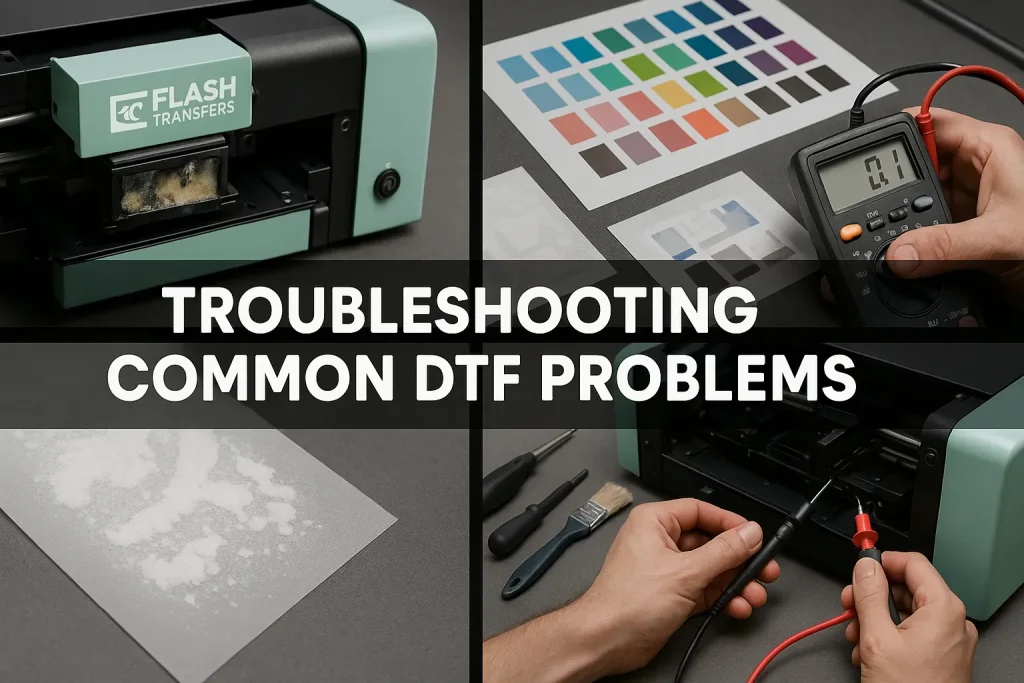
DTF troubleshooting is essential for direct-to-film workflows, helping teams anticipate issues before they derail orders and impact delivery timelines. In practice, common DTF transfer issues and heat press transfer problems surface during color builds, adhesion stages, or curing steps, making early detection valuable. Watch for DTF ink smearing, misregistration, or uneven underbase coverage, and follow a structured diagnostic flow to isolate root causes quickly. This guide offers practical quick fixes and longer-term strategies to stabilize results across fabrics, films, powders, and varying ambient conditions. Regular DTF printer maintenance and calibrated heat press settings help minimize downtime, reduce waste, and maintain consistent quality across multiple production runs.
From a broader perspective, this field encompasses direct-to-film workflow optimization, equipment checks, and issue-resolution strategies that keep jobs moving. Rather than fixes alone, practitioners focus on symptom-aware approaches—alignment checks, consistent material handling, and controlled curing—to boost reliability. By varying media, powders, and garment types while tracking outcomes, teams apply process tuning, quality control cycles, and preventative maintenance to reduce repeats. Overall, the emphasis is on structured diagnostics, repeatable settings, and informed decision-making that align print quality with production demands.
DTF transfer issues: diagnosing and fixing common problems
DTF transfer issues are common in production, but they are often predictable when you follow a structured troubleshooting mindset. This section explores how problems such as faint transfers, color gaps, and misregistration manifest in real-world runs, tying them to actionable fixes you can apply during a shift. Understanding these DTF transfer issues helps you move from guesswork to a clear diagnostic path.
By framing the problem in terms of the entire workflow—printer maintenance, film quality, adhesive powder consistency, and heat press parameters—you can pinpoint root causes more quickly. Start with baseline checks on nozzle health, verify film stock integrity, and confirm powder coverage as foundational steps that influence every transfer outcome. Embedding this approach into your DTF troubleshooting workflow reduces downtime and waste.
Heat press transfer problems: optimizing temps, time, and pressure
Heat press transfer problems typically arise from incorrect temperatures, dwell times, or uneven pressure distribution. If the press cannot consistently reach or hold the target temperature, even a correctly printed film can fail to bond or transfer unevenly. This area also covers how dwell time interacts with substrate absorption to shape final results, making precise control essential.
To prevent heat-related issues, use a calibrated heat press and run controlled tests on a standard garment. Check for hot and cold spots on the platen, verify consistent pressure across the platen area, and maintain a stable room environment. Documented settings for each fabric type help create repeatable results and reduce heat-induced variability in each job.
DTF ink smearing: causes, prevention, and cure
DTF ink smearing is a common symptom of moisture, improper drying, or mis-timed steps in the transfer sequence. When ink remains damp or the film is not adequately cured before applying powder, smearing can occur post-press. Understanding how drying time, film dryness, and powder tack interact keeps you ahead of this issue.
Preventive measures include enforcing a consistent drying interval after printing, ensuring powders are stored dry and free-flowing, and maintaining proper ink viscosity and curing times. Monitoring humidity and ambient conditions also helps minimize ink smearing, especially when using white or light-color inks the underbase relies on for vibrant transfer results.
DTF printer maintenance for consistent results
DTF printer maintenance is foundational to stability and repeatability. Regular cleaning of print heads, systematic nozzle checks, and timely alignment adjustments reduce color drift and line defects that complicate troubleshooting. A well-maintained printer directly supports the reliability of your transfers and minimizes surprising deviations.
Beyond printing machines, maintenance extends to consumables and workflow hygiene. Store films flat, keep powders dry, and schedule routine checks for the adhesive system and curing stage. Documenting maintenance tasks and results—such as nozzle health, color calibration status, and platen cleanliness—helps your team sustain high-quality outputs over time.
Registration and color accuracy: avoiding ghosting and misalignment
Registration and color accuracy are critical for crisp, professional results. Misalignment can produce ghosting, color bleed, or uneven adhesion, particularly when working with multi-pass prints or curved garment surfaces. Tackling these issues requires precise garment placement, reliable alignment guides, and stable platen conditions.
To improve color accuracy, implement routine color calibration with standardized profiles and test on multiple fabrics to understand substrate variability. Consistent alignment checks, platen flatness verification, and a clear garment prep protocol help reduce misregistration across orders, supporting stronger overall production quality.
DTF troubleshooting guide: a structured, step-by-step flow to reliable transfers
DTF troubleshooting guide outlines a disciplined approach to diagnosing and fixing transfer problems. By following a step-by-step flow—from basic checks to targeted adjustments—you can shrink cycle times and improve transfer stability across fabrics and films. This structured method anchors your decisions in measurable criteria rather than guesswork.
The diagnostic flow starts with basic inspections (garment type, film, adhesive powder, and heat press settings), then moves to printing quality checks (nozzle health, color calibration, and test patterns). It continues through film and powder processing, post-press handling, and variable elimination—changing one element at a time to identify the root cause. Maintaining SOPs and logs for each job reinforces consistency and speeds troubleshooting in future runs.
Frequently Asked Questions
What is DTF troubleshooting and how can it help resolve common DTF transfer issues?
DTF troubleshooting is a structured diagnostic approach to identify and fix issues in the direct-to-film workflow. By following a step-by-step diagnostic sequence—from verifying basics like heat press settings and film quality to checking printing quality and post-press handling—you can quickly resolve common DTF transfer issues and reduce downtime.
What are the most common heat press transfer problems in DTF troubleshooting, and how can I fix them quickly?
Common heat press transfer problems include inadequate temperature, insufficient dwell time, and excessive pressure. In a DTF troubleshooting workflow, verify the press temperature with a reliable thermometer, ensure the dwell time is correct, use appropriate pressure, and re-test with calibrated settings.
Why does DTF ink smearing occur and how can I prevent it through DTF troubleshooting?
Ink smearing happens when the printed film hasn’t fully dried or cured, or when moisture is introduced during handling. Prevent it by allowing sufficient drying and curing time after printing, ensuring powders are dry and evenly applied, and following recommended heat and cooling sequences; also perform nozzle checks to keep print quality consistent.
Which maintenance steps constitute effective DTF printer maintenance within a troubleshooting workflow?
Effective DTF printer maintenance includes regular print head cleaning, nozzle checks, and color calibration. Routine maintenance helps prevent color drift and line defects that complicate troubleshooting and keeps print quality stable across jobs.
How can a DTF troubleshooting guide help diagnose color reproduction issues and misregistration?
A DTF troubleshooting guide highlights color calibration, ICC profiles, and alignment checks. By running test patterns, verifying white underbase and color base layers, and checking registration marks, you can identify color shifts and ghosting early and correct misregistration quickly.
What practical checks from a DTF troubleshooting guide help prevent peeling, cracking, or washing-related failures?
Practical checks include confirming adhesive compatibility with the fabric, choosing correct pressing parameters (temperature, time, pressure), and ensuring proper cooling after transfer. Following the DTF troubleshooting guide helps you create durable transfers that resist peeling, cracking, and wash-related failures.
| Area | Key Points |
|---|---|
| Overview | DTF troubleshooting is essential for direct-to-film transfers; a systematic approach helps identify and fix common issues, reducing waste and delays. Core causes include printer settings, film quality, heat press timing, and garment type, all of which impact results. |
| DTF workflow elements | Key elements: printer color accuracy; film and powder quality; heat press temperature and dwell time; garment type. Understanding how these interact helps diagnose problems quickly and apply the right fixes. |
| What you’ll learn | – Identify common transfer issues early; – Implement quick fixes; – Follow a structured diagnostic flow; – Practice maintenance to prevent recurring problems; – Know when to adjust settings vs replace consumables. |
| No transfer | Causes: insufficient heat/time; inadequate powder adhesion; incorrect transfer film/adhesive; printing/alignment issues. Fixes: verify temperature/time; refresh adhesive powder; inspect film; run nozzle checks to confirm alignment. |
| Missing colors / color shifts | Causes: incorrect color calibration; white ink underbase problems; drying too aggressively. Fixes: calibrate color profiles; verify white underbase; adjust print settings for solid base before powder application. |
| Ghosting / color bleed | Causes: registration errors; temperature fluctuations; substrate variability. Fixes: recalibrate alignment marks; stabilize heat press temperature; test across garment types. |
| Ink smearing / smudging after pressing | Causes: inadequate drying time; moisture in film or powder; excessive pressure or incorrect pressing sequence. Fixes: allow film to dry/cure; ensure powders are dry and evenly applied; use recommended pressing pressure. |
| Misalignment | Causes: poor garment placement; platen issues. Fixes: use alignment jig; inspect/replace worn platen; re-test with calibration garment. |
| Diagnosing flow | Steps: 1) Inspect basics (garment type, film, powder, heat settings). 2) Confirm print quality (nozzle check, color calibration). 3) Verify film/powder process (coverage, curing). 4) Check post-press handling (cooling, wash care). 5) Eliminate variables by swapping one factor at a time. |
| Maintenance & prevention | – Clean print heads and inspect nozzles regularly. – Store films and powders properly. – Clean the heat press platen; replace if worn. – Test new lots with small checks. – Train staff on the diagnostic flow. |
Summary
DTF troubleshooting is a practical discipline that helps transform variable transfers into reliable, repeatable results. By understanding DTF transfer issues, optimizing heat press transfer problems, addressing DTF ink smearing, and maintaining DTF printer maintenance practices, you can minimize downtime and deliver high-quality, durable prints. This DTF troubleshooting guide emphasizes practical, step-by-step strategies to improve consistency across production runs and ensure customers receive consistent results with every order.